
My Role
I designed UX workflows, interface structures, and configuration experiences for technical healthcare users managing clinical data exchange across connected systems.
My role included translating complex interoperability requirements into usable workflows for route setup, message monitoring, transaction review, failure investigation, data transformation, and message tracing.
I collaborated with product, engineering, architects, and technical stakeholders to simplify highly technical workflows while preserving accuracy, traceability, audit visibility, and operational control.
Design Opportunity
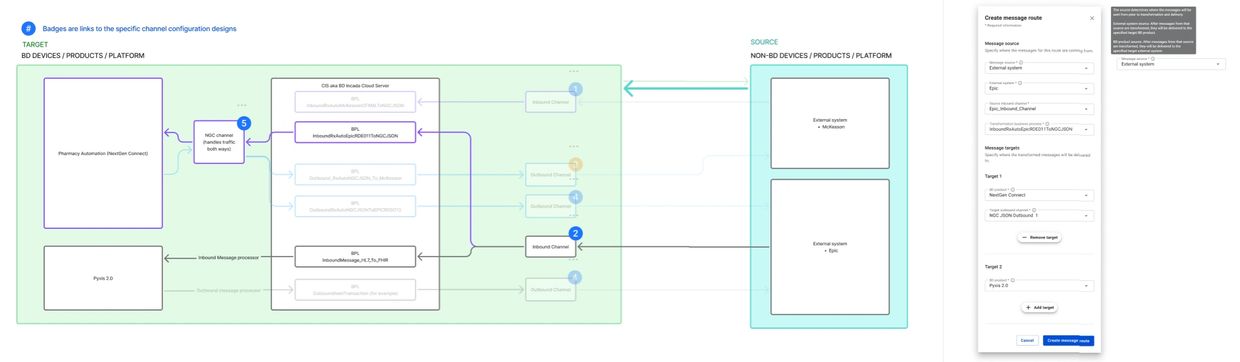
The opportunity was to create a clearer CIS experience that made clinical data exchange easier to configure, monitor, troubleshoot, update, and support.
Instead of relying on fragmented desktop workflows and vendor dependent setup, CIS gives users a more consistent way to manage routing logic, review message activity, identify failures, trace message behavior, and understand how data moves across connected healthcare systems.
CIS Message Routes
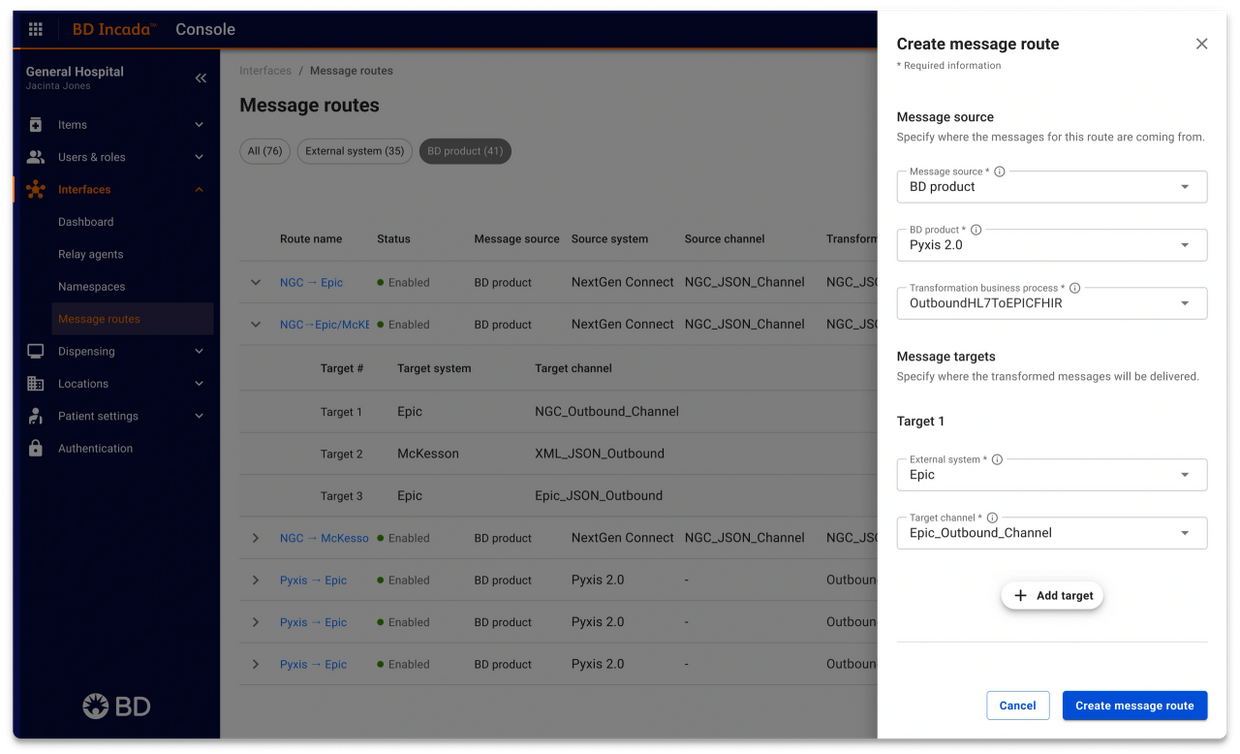
Design Solution: Designed routing configuration workflows for inbound and outbound clinical data moving between external EHR systems and BD connected healthcare systems.
This experience helps integration teams define endpoints, manage channels, configure route behavior, and control how clinical data moves from source systems into Pharmacy Automation and Pyxis environments.
CIS Message Logs
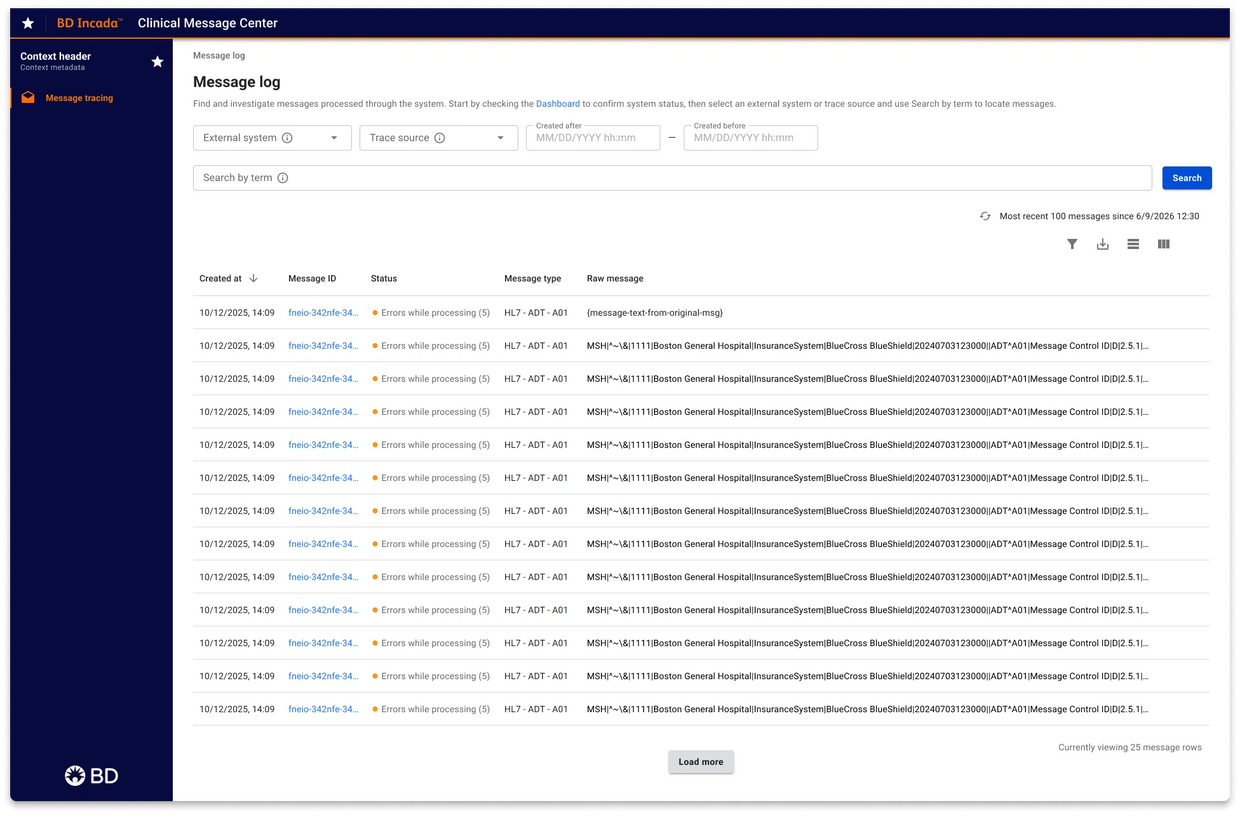
Design Solution: Designed monitoring and troubleshooting workflows for tracking EHR data exchange, transaction activity, routing failures, and system connectivity issues.
This experience helps technical teams review message activity, understand what happened during data exchange, isolate failures, and investigate transaction history across the interoperability workflow.
CIS Message Tracing

Design Solution: Designed message tracing workflows that help technical teams understand how clinical data moves, changes, and resolves across EHR systems, routing channels, endpoints, logs, transformations, and BD connected healthcare systems.
This experience supports investigation of where a data message changed, failed, stalled, or moved successfully across the interoperability process. It helps users follow the full path of a message from source system through routing, transformation, delivery, and system response.
Current work incorporates AI support to reduce manual investigation, surface likely failure points, and make complex message behavior easier to understand.